

Blog
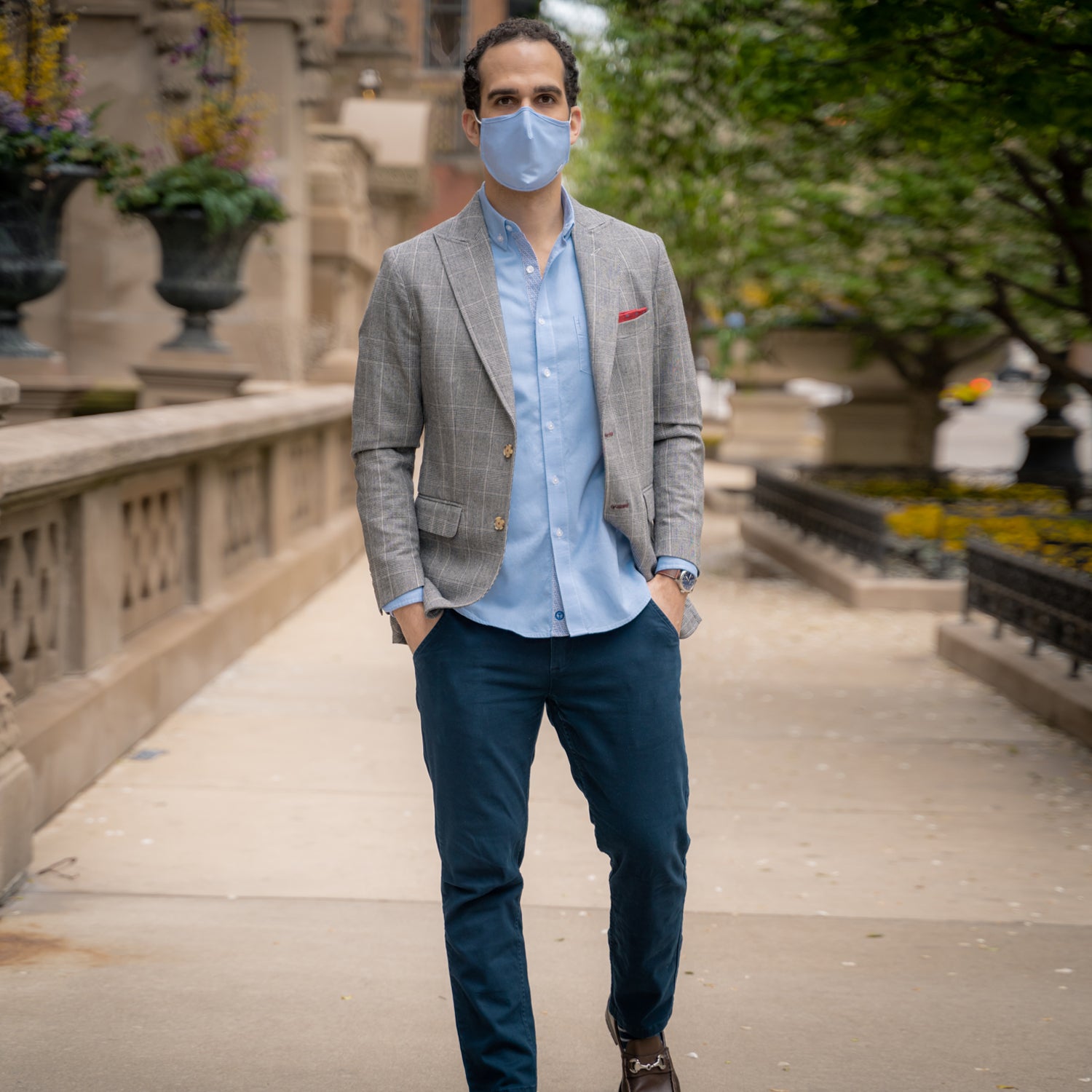

How Should Dress Pants Fit?
Most men put consideration into how their shirts fit. You may not even hesitate to pay more for a tailored jacket. However, too often men forget about the fit of their pants. How your pants fit is an essential part of your overall look. Here's what you need to know about how dress pants should fit and how they should look with your dress shirt and jacket. Essentials of How Dress Pants Should Look To make good decisions about what dress pants to buy and how to wear them, you have to know how they should look. Here are some essentials about the way your dress pants should fit and how they should look on you. How Should Your Pants Fit Your Body? Not Too Loose More men tend to wear their pants too loose than too tight. Pants that are too tight aren’t comfortable, so it is easier for you to realize that they're not the right fit for you. You probably know to test pants by sitting down in them before you buy them. Pants should be just loose enough to allow you free range of motion, but still fit the contours of your body. The Correct Length Your pants should not be too short or too long. Some men like a very slight break in most pants where the fabric just drapes over the edge of the shoe. However, these days, the style is to have no break at all (otherwise known as a zero break.) In any style, a big break, in which the fabric hangs over the back of the shoe or even comes close to the ground, means the pants are too long. Pants are too short if you can see a lot of the sock when you are standing in a relaxed position. Preferences vary on how much of the sock can be revealed, though. Sit on the Natural Waist Pants that are cut too low on your waist tend to have an unflattering fit. It can be harder to find pants that sit on your natural waist without a belt and fit you well, but it is worth the extra effort to avoid pants that sit too low. Choose a Tailored Cut Some men prefer a wider cut in the pants, but for the vast majority of men, a slimmer cut is considered more fashionable by modern standards. Pants with a slimmer cut shouldn't have any break at all. The hem should end cleanly at the top of your shoe and reveal a little bit of sock. The leg should fit the contours of your body from the thigh all the way down through the calf. To be sure that you're picking the right cut for you, pick pants that have a little bit of stretch and choose from tailored or extra trim, depending on how slender your legs are. Pick a Lightweight Material Your pants are one thing that you generally want to be light and cool. The fabric of heavier pants may not seem too uncomfortable when you try them on in the store, but if you want to spend all day in a pair of pants, you need something that is light enough to be comfortable even in the heat. Pick a hyper breathable and moisture-wicking material that will keep you comfortable even through a long day of work. How Should Your Pants Look When Worn? Always Wrinkle-Free Pants that are wrinkled are never a good look. Since you will almost certainly be sitting in your pants, you need to choose a wrinkle-free fabric that will keep looking good as you sit and stand throughout the day. Ideally, your pants will be able to go from the dryer to the drawer to being worn without a wrinkle. This will save you a significant amount of time in your daily preparations for work or for going to a formal occasion. Stays Straight Pants tend to move over the course of the day, no matter how well they fit. The only way to ensure that your pants don't move around throughout the day is to wear suspenders, but these have fallen out of fashion. For men that would rather not wear suspenders but want their pants to stay in place and look great all day, a great pair of dress pants with a shirt-gripping waistband will help your pants and your shirt to stay in place, helping the entire style to look organized and well-fitted. Another great tactic for getting your pants to stay in place is to choose pants that have some stretch. Most people don't think about stretch and dress pants, but you won't be able to tell that your pants have stretch. Pants with some stretch do a better job of moving with you instead of shifting on your body throughout the day. Shirt Stays Tucked In Your shirt should stay tucked in all of the time. Whether your shirt stays tucked or not depends a lot on the shirt, but the right pants can help as well. Choose pants that grip your shirt to keep it in place. Pants that don't move around on your body are also more likely to keep your shirt tucked in, so a close fit and a little bit of stretch can help as well. Make Sure That Your Pants Fit Well Don't make the mistake of overlooking how your pants fit when you are putting together an outfit. Whether you are wearing your dress pants to work or to a formal occasion, you need pants that fit you well and look great on. High-quality pants that fit you well are essential for the success of your look. In some ways, getting great dress pants is even more important than buying a well-fitted dress shirt, since you'll probably wear your dress pants with multiple shirts. Click Here to Email Us to Get Your Correct Sizing → Sources: https://www.esquire.com/style/mens-fashion/a19850858/5-things-to-do-when-shopping-for-your-next-suit/#:~:text=Erlanger%20says%20your%20trousers%20should,shoe%20is%20a%20full%20break.) https://www.gentlemansgazette.com/how-pants-should-fit/ https://www.businessinsider.com/how-mens-clothes-should-fit-2014-1
Learn more
How To Iron Dress Pants With Crease?
You probably make sure that your shirt isn't wrinkled when you leave the house, but how often do you check how your pants look? Wrinkles may be harder to see in pants, especially dark pants, but in the light, it will be clear that you haven't prepared yourself properly for the day. Here's what you need to know about how to iron dress pants and what you can do to iron less often. Ironing Suit Pants, Slacks & Trousers With A Crease 1. Set the Stage Before you begin ironing, be sure that both your iron and your pants are clean. Set up your ironing table and be sure that you have enough room to stretch out the pant leg. You will need to bunch the pants a little bit as you work, but the more space you have, the better. Be sure that the iron you choose has a more narrow, pointed tip to help you do detail work, especially between buttons. Adjust the settings of your iron depending on the type of pants. Wool pants need a lower setting than cotton does, and linen can handle an even higher setting than cotton. In general, you want to go with the lowest setting that will be functional to avoid doing damage to the pants. You also don't want to hold the iron in place longer than you should because the iron isn’t hot enough. Sold out Sold out Sold out Sold out Tools to Help You Iron Distilled Water to Avoid White Specks It's best to fill your iron with distilled water. Most tap water is hard enough to cause limescale to collect in the iron. If you think you don't care about limescale on your iron, you'll find you change your mind when little white specks and flakes come out of the steam and get all over your pants. While they can be brushed off, this is an added step, and you might not get them all off of darker pants. Another great option is to choose dark, wrinkle-free pants to start with so you won’t have to worry about ironing, distilled water, or white specks in the first place! Tailor’s Ham for the Details A Tailor's ham is an extremely convenient tool to have available when you are ironing your pants. It makes ironing the upper section of the pants much easier and more effective. Instead of working on a flat surface, you can contour the pants’ shape as though you were wearing them. Pressing Cloth for Wool If you are ironing wool trousers, it is best to use a pressing cloth between the fabric and the iron. This is a simple solution to the concern of shining the wool, i.e. creating an unattractive sheen on the fabric. Even when you are using a pressing cloth, be careful to never drag the iron along the fabric, as this is how the wool ends up being shined. A pressing cloth isn't generally needed for any other kind of pant fabric besides wool. Tailor’s Clapper The Tailors Clapper is used to provide a crisp, clean line when you are putting a crease into your pants’ legs. While it isn't necessary, it can help to provide a very sharp line without you having to iron as much, which is gentler on the fabric. 2. Iron the Upper Part of the Pants When you’re ironing pants, your experience at the beginning will be much like ironing a shirt. You will use short, brief strokes to smooth out wrinkles around the pockets, seams, and hem. A Tailor's Ham to contour the pants around makes it much easier for you to iron out this part of the pants. Remember to iron with small movements, pressing and lifting, not dragging. If you catch the iron on any of the pants’ details, it could pull and create more wrinkles instead of fewer ones. Ironing out wrinkles that have been ironed in is a challenge. Pants with belt loops present a special challenge, but you can get between them and iron efficiently using the tip of the iron. Be very careful not to snag the tip of the iron in the belt loop. 3. Crease the Legs Usually, the goal when you are ironing your pant legs is to create a clean, sharp crease that gives your pants that just-ironed look. Both the front and the back of your pants should be creased. Less formal pants may have flat fronts, but more formal dress pants are nearly always done with a crease in the back and the front. If you're unsure whether your pants should have a crease or not, consider whether they had a crease when you bought them. The crease should be centered perfectly in the middle of the leg, and should line up with the previous crease. Wool dress pants tend to maintain their crease through washing. Cotton dress pants may be more likely to have a crease fade. In these cases, it is generally best to completely iron out the existing crease and create a flat leg from which you can create a new crease. To find the crease, find the top and bottom seam on the inside of one leg of the pant. When the seams are pressed together, the fold should lay down the center of the leg. Once you find the crease, start as high up in the waist as you want the crease to go. Most men prefer the crease to start about a foot and a half below the waist. Gently iron in the crease, being very careful not to drag the iron along the fabric. If you want to use a Tailor’s Clapper to provide a very sharp line, use it at this time. Sound Too Tedious? Consider Wrinkle-Free Pants! If all of this ironing seems like an awful lot of work, pants that you don't have to iron are a pretty good alternative. Quality non-iron pants let you look great right from the closet, without having to worry about ironing. In today’s busy business world when every second counts, skipping ironing is a big deal and a huge time saver that lets you put your productivity to better use. Perhaps more importantly, wrinkle-free pants won’t get wrinkled throughout the day like regular pants, keeping that collected, professional look lasting all day long. Click Here to Email Us to Get Your Correct Sizing →Sources: https://www.gentlemansgazette.com/how-iron-dress-pants-trousers/ https://www.artofmanliness.com/articles/how-to-iron-trousers/ https://www.realmenrealstyle.com/ironing-trousers-guide/
Learn more
How Many Dress Shirts Do I Need?
Every man has at least a few dress shirts in his wardrobe, but how many dress shirts do you really need? Whether your closet is overflowing and you think it may be time to pare down or you only have a couple of shirts and wonder whether you should purchase more, here's what you need to know about how many dress shirts a man should have. How Often do you Wear Dress Shirts? The first question in determining how many dress shirts you need is finding out how often you wear them. If you wear a dress shirt to work every day (especially without an undershirt) and favor them for after-work occasions and doing things on the weekend as well, you will surely need more dress shirts than if you only wear them to the occasional formal event. Some men have as many as 70 dress shirts and don’t think they have too many. On the other hand, many men find themselves addicted to the dopamine spike of buying things and end up with far more shirts than they know what to do with. Here are some considerations to help you decide how many dress shirts you need depending on how you wear them. How Many Dress Shirts Do You Need for the Office? If you wear a dress shirt to the office every day but generally don't wear them on many other occasions, you won't need as much variety. Dress shirts that are appropriate for the office are generally of muted colors and mild designs. They should not have pockets on the front. If you do your laundry every week, in theory, you'd only need 5 dress shirts. However, this isn't enough for a couple of reasons: Most Comfortable Stretchy Dress Shirts You Never Need To Iron: === split content ===BALLER // Performance Black=== split content ====== split content ===Non-Iron Black Skull Contrast=== split content ====== split content ===CLOSER // Performance Blue=== split content ====== split content ===Non-Iron Navy Rooftop Dobby=== split content === More Shirts Spread Out Wear and Tear If you wear a dress shirt every week, it will take a lot more wear. You'll only be able to wear your shirt for a few months on average before it starts to look a bit faded and worn. This is especially true if you need to iron the shirt. A quality, wrinkle-free shirt that you don't need to iron will look good for much, much longer. That said, it is still worth having at least 10 to 15 dress shirts in your wardrobe to reduce wear and tear. You’ll be able to wear each shirt for longer and still have it look perfect. Having A Variety of Dress Shirts Makes a Good Impression Don't be that guy in the office who always wears his fun shirt on Friday. Having variety in your shirts is just as important as having high-quality shirts. Even if most of your shirts have a similar look, people can tell the difference between shirts that just look similar and the same shirt. You may find that you make a better impression in the office if you use your dress shirts to express your mood and style. Just got a promotion? Wear a bold dress shirt that screams, “I'm a success!” Feeling the Mondays in a meaningful sort of way? Wear a somber dress shirt that matches your mood. How Many Dress Shirts do You Need for Casual Wear? Too many men are missing the opportunity to wear dress shirts as casual wear. In a world that is becoming increasingly focused on dressing down, men who choose to dress up a little bit give an impression of confidence and class. If you are wearing dress shirts for casual occasions, you'll need considerably more and different shirts than for the office. Here are some casual opportunities to wear a dress shirt and the kind of shirt that you’ll want for each. Dress Shirts are Perfect for Dates and Get-Togethers A dress shirt can be an awesome pick for all kinds of social gatherings. If you're ever unsure how formal the dress code at a given event will be, it's always better to err on the side of formality. Better to be overdressed than underdressed. A great example of a dressed down dress shirt is this skull shirt--it’s the perfect way to wear a dress shirt for more casual gatherings and adjust how formal you look at the event. This very cool shirt has a unique skull print in the lining for the collar and the sleeves. When you have the shirt fully buttoned and the sleeves rolled down, the print won't be visible and it will look like any other formal dress shirt. However, if you unbutton the first couple of buttons and roll up the sleeves, the skull print is revealed. This is the perfect look for any date or casual gathering: edgy but classy. Dress Shirts Keep you Classy at the Club If you want to look your best when you go out, wearing a dress shirt is a good way to go. Choose a tailored fit that flatters your body. Non-iron stretch fabric is definitely the way to go for a club dress shirt. You want complete freedom of movement so that nothing will get in the way of dancing. An untuckable length will look perfect with your favorite pair of jeans. If you really want to have some fun with your dress shirt at the club, pick a high-quality but fun shirt like this non-iron dress shirt with glow-in-the-dark details. Your shirt won't stand out too much, since only the buttons and some of the stitching are glow-in-the-dark, but these details can make all the difference and get the attention you want when you are at the club. Dress Shirts are Ideal for Outdoors Activities You may not think about a dress shirt for outdoor activities, but in fact, dress shirts are very practical for all kinds of activewear. Being able to roll up the sleeves lets you adjust your temperature depending on your activity level and the weather. A quality dress shirt that is made of a moisture-wicking and hyper-breathable material will keep you incredibly comfortable no matter what you're up to. So, How Many Dress Shirts Does a Man Need? If you are wearing dress shirts to their full potential, you may be surprised by how many you end up needing. You'll need at least a dozen dress shirts just for the office at a bare minimum. Add to that a handful of great shirts for casual gatherings, dates, outdoor activities, and going to the club, and you'll probably find that around 20 to 30 dress shirts is right for most men. This may seem like a lot, but replacing some of the t-shirts and polos in your closet with great dress shirts is sure to up your style game for every activity! Click Here to Email Us to Get Your Correct Sizing → Related CollectionsAll Men's Business Attire • Men's Shirts • Men's Dress Shirts • Best Men's Performance Polo ShirtsRelated ProductsMen's Performance Henley Long Sleeve Shirt • Men's Performance Tee • Long Sleeve Performance Shirt • Casual Untuckbale Button Down Shirts • Performance Polo T Shirt • Metal Shirt Collar Stays • Performance Button Down Polo Shirt • Non-Iron White Dress Shirt • Men's Performance Henley Long Sleeve Shirt • Men's White Non-Iron Skull Contrast Dress Shirt • Men's White Performance Dress Shirt • Performance V Neck T Shirt • Non-Iron White Pointed Collar Dress Shirt • Men's Long Sleeve Performance Shirt • Men's Performance Tee • Grey & Blue Dress Shirt • Red and Blue Check Shirt For Men • Men's Stretch Performance Black Dress Shirt • Men's Untucked White Short Sleeve Shirt • Men's Blue Non-Iron Skull Contrast Dress Shirt • Men's Black Non-Iron Skull Contrast Dress Shirt • Men's French Cuff Dress Shirt • Blue & Grey Dress Shirt • Blue And White Dress Shirt • Blue Check Shirt For Men • Window Pane Shirt • Light Blue Dress Shirt For Men • White & Blue Print Window Pane Shirt • Light Blue Dress Shirt For Men • Black And White Dress Shirt • Purple Pattern Dress Shirt • Men's Performance Blue, Light Blue, White Mirco Check Dress Shirt • Grey Check Dress Shirt • Grey & Blue Window Pane Print Non Iron Shirt • Men's Performance Thick Blue Check With Red Line Dress Shirt • Purple And White Dress Shirt • Light Blue & Grey Dress Shirt • White, Pink & Blue Non Iron Print Window Pane Shirt • Men's Performance Red Pink Blue Check Dress Shirt • Men's Performance Thick Blue & Red Gingham Dress Shirt • White Dress Shirt With Pocket • Men's Orange Dress Shirt • Men's Performance Thick Light Blue & Orange Check Dress Shirt • Blue & Purple Dress Shirt • Men's Untucked Grey Long Sleeve Shirt Sources: https://www.gentlemansgazette.com/how-many-dress-shirts-do-you-need/ https://economictimes.indiatimes.com/magazines/panache/7-pairs-of-pants-50-shirts-how-many-clothes-does-a-man-need-after-all/articleshow/62734479.cms https://www.artofmanliness.com/articles/how-to-build-your-wardrobe-2/
Learn more
What's the Best Material for Men's Dress Pants?
If you want to look your best, you need to hone in on the details of your clothes. Not just the shirt, but the pants. We are striving for optimum style here, gentlemen! So we need to scrutinize not just the fit, but the materials of our pants as well. It is far too easy to get swept up in the style, color, and brand, without paying attention to the material. Material is everything! After all, you're feeling these bad boys brush up against your legs all day. I'm going to take a wild guess and say you haven't researched pants material before. Allow me. Let's take a look at the variety of dress pant materials on the market to help you decide which is best for you. 👇 1. WOOL Wool does not rhyme with cool, therefore it is not a "cool" choice anymore.😉 At one point, we'll admit, it was cool. It is probably one of the most common traditional materials for men's dress pants. Wool has many advantages which helped it hold the number one spot for so long, but it also has some distinct disadvantages. Advantages of Wool Moisture-wicking. Wool naturally pulls moisture away from your skin and dries quickly, making it an excellent fit for dress pants that you want to stay dry. Keeps you warm. Unless you want to wear long underpants, you probably want dress pants that keep you nice and warm in very cold climates. Doesn't retain body odor. Wool suit pants made out of high-quality Merino wool tend not to retain body odor, which is a valuable trait in pants. Disadvantages of Wool Expensive. Wool blends tend to be quite expensive, especially if you are choosing very high-quality wool pants. Delicate. Wool pants generally cannot be machine washed at home, and they wrinkle easily. Ironing can damage the delicate fibers. Itchy. Even the highest-quality wool tends to be itchier than other options, which can get to you if you're wearing your dress pants all day. Sold out Sold out Sold out 2. COTTON Cotton and cotton blends are pretty common in dress pants. They can be a great option, but if you ask me, might be synonymous with "boring." Don't ask me, ask the facts. Advantages of Cotton Cool. If you're looking for pants that feel good in the summer or don't get too warm when you are in a heated office, cotton is the fabric of choice. Affordable. Cotton and cotton blends tend to be some of the more affordable options when you are choosing dress pants. Durable. Cotton dress pants can usually hold up just fine to being washed, dried and ironed at home. Disadvantages of Cotton Retains moisture. Cotton tends to hold onto moisture, which means that you are more likely to be uncomfortable in your dress pants. Furthermore, since there's moisture retained, smell is retained also, which means that your linen suit pants may smell worse quicker than other fabrics. Shrinks. Cotton has a tendency to shrink in the wash, which means that while it is durable enough to hold after washing, it may not fit you as well afterward. 3. SYNTHETIC Advantages of Synthetics Cool and dry. Very high-quality synthetic fabrics, like those used to make Twillory's best seller men's dress pants, are designed to be both breathable and moisture-wicking. These dress pants stay cool and comfortable and also keep you dry. They also come in a variety of different fits ranging from slim fit pants to classic fit pants. Durable and non-iron dress pants. You can wash and dry your synthetic dress pants at home, and don't worry about ironing them thanks to premium no iron material. This means you'll save a lot of time and also look your best in your pants. Performance stretch. Lots of people don't realize how nice it is to have some comfort stretch in their dress pants until they try stretch pants. You'll be able to sit down all day in complete comfort and look great when you go to your late afternoon meeting. Many people think that stretch pants = casual pants like stretch chino pants, flat front pants, khaki pants, corduroy pants, or even denim pants. However, these amazing new arrivals have all the comfort and the formality of regular pleat-front dress pants to help you get through your workday. Disadvantages of Synthetics Less traditional. Those who have been wearing wool dress pants for many years may have a hard time making the switch to synthetic. May cause allergies. If synthetic fabrics have bothered your allergies before, you may want to avoid them, but the vast majority of people aren't bothered by synthetic fabrics. What to Look for When Picking out the Absolute Best Pair of Pants? ✍️ I'm just going to give it to you straight: synthetic dress pants are the best option. When wool, twill, gabardine, and cotton were the only options in dress pants, they worked just fine. Especially when it came to the classic pleated pants that came in a variety of different patterns like windowpane, houndstooth, herringbone, or plaid. But this is 2022. And we're now smarter, wiser and far more advanced. Synthetics offer all the advantages of the old natural materials without worrying about the problems that come along with them. Plus, how can you beat the more affordable price of synthetic fabrics?? ✅ Shirt Gripping Waistband Now this, is epic. Pants that keep your shirt firmly in place mean that you have one less thing to worry about throughout your day.😎 You can tuck your dress shirt or polo in and forget about it. We have bigger problems to worry about, like which emails get top priority or what we're eating for lunch today. ✅ Pockets (especially with zippers / snug fit) Don't settle for dress pants that skimp on pockets just because it's formal wear. Pockets = Success. Look for dress pants that offer travel pockets, including a zippered pocket so you don't have to worry about any of your trinkets going MIA. ✅ Excellent Synthetic Fabric The best men's dress pants, like those designed by the ever-fabulous company I like to call Twillory, are made of a high-performing Japanese stretch fabric that eliminates moisture and delivers extraordinary airflow. It truly is as beautiful as it sounds.🥺 These pants stretch to keep you comfortable but look just like traditional dress pants. Dynamic 4-way stretch allows you to move your legs in literally in any direction while still looking great. ✅ Color Choices As a general rule, it's best to choose neutral colors when picking out dress pants. Shades of grey and navy are always a safe choice. Along with black and charcoal, which match almost everything, so it's hard to go wrong. Then there's khaki. I mean, what person doesn't own khaki?? Choose Great Dress Pants for YOU The best men's dress pants are made of a material that works for you. After all, it's your life, you're living it. But if I were you, I'd choose dress pants that are wrinkle-free, easy to clean, super comfortable, and look fabulous 24/7. So for most, a synthetic fabric is the perfect answer. 🤝 Stay stylin' my dudes! -Eli P.S. If you're looking for reliable dress pants that don't suck, check these out... EXPLORE PERFORMANCE PANTS
Learn more
Where Should Men's Dress Pants Break?
Many people don't know about pant breaks, but they make a big difference in how your pants look. Here's what you need to know about pant breaks and where your pants should break to look best on you. What Is a Pant Break? The pants break is the crease of fabric at the front of the pant leg. It generally hangs just above where the pleated pants meet your shoe when you're standing up. The break is defined only in the standing position, not when you're walking or seated. In general, the longer your pants are, the more pleated they'll be, and the wider your pants, the less break they'll have. That's because a wider leg opening means the pant fabric has a harder time making exact contact with the dress shoes. Slimmer leg openings form a break more easily than larger ones that will create a flat front rather than a pleat-front. While this holds true for dress pants and linen suits, it can also apply to denim as well. How to Choose the Best Pant Break for You There aren't necessarily tried-and-true rules for what determines a great pant break. Rather, a number of factors go into determining how your suit pants break. Fit. Pants that fit tighter on you like slim fit pants may have a different break than pants with a more generous fit, like a classic fit. Width of legs. Whether the pant legs are wider or more slender helps to determine how the break is defined. How do you like your break to look. Some people prefer no break at all, while others prefer very clear breaks. Often, what works best for you depends on your personal preferences. Types of Pant Break No Break No break pants have hems that sit above the shoe and offer a clean silhouette without a peak. The pant legs may appear slightly shorter, and it may be more likely that your socks will be revealed. These pants offer a modern effect that does not have the peak above your shoe known as the break. They offer a modern, sharp, minimalist look that is very trendy right now. If you want to have a youthful, cool vibe, no break pants may be a great pick for you. If you are in a very conservative workplace and frequently wear blazers or sport coats, pants without a break may seem too modern and not formal enough. Quarter Break The quarter break doesn't offer a dramatic break, but it provides a more traditional look than no break pants. A quarter break hem sets just above where the pant legs meet your shoe. Quarter breaks look great on slim pants with a tapered effect, similar to the same sorts of pants that look good with no break. They often tend to look great on taller and more slender men. Half Break This is a good versatile solution if you are not sure what your office requires. It's not traditional enough to get you laughed at by your younger peers but also not so modern that you will raise eyebrows from your superiors in the office. Half break pants have a hem that sits about halfway down past wear the pants meet your shoe, creating a slight fold. Full Break Pants These pants are the most conservative option with a very classic look. The hem of your pants makes a lot of contact with your shoes, creating a ripple above the hem. They are the least likely to show your socks and look better with pants that are less tapered. It is easy to go too long with these kinds of pants, creating a bunch of wrinkles at the hem. This is a great option for men who are a bit heavier or those who normally wear men's big & tall. What Is the Best Kind of Pant Break for You? The best pant break for your style is largely a matter of personal preference. However, there are some important things to keep in mind as you are choosing what kind of pants are best. Here are some considerations in choosing the best pant break for your pants. How Do You Feel About Socks? Do you love wearing stylish socks that express your personality? In many places of business, socks have replaced ties as the accessory of choice to show a bit of individual fashion and personality. If you love to show off your socks, you'll want pants with as little break as possible. Stylish no break dress pants like these men's dress pants by Twillory give you the perfect opportunity to rock your favorite socks and even have fun with patterns like plaid, windowpane, houndstooth, or herringbone. How Is Your Body Shaped? Style is trending more towards more slender pants, but if you are heavier set, these pants might not look the best on you. Men who are heavier often look better in pants with more break, such as full break pants. This is because they tend to make the legs look longer and the man look taller. However, if you are more slender, you will probably want more tapered pants and less of a break to chop your body up and make it look more proportional. How Traditional Is Your Workplace? If you work in an extremely traditional workplace, more break is probably the best option. After all, you wouldn't want to look as if you're wearing casual pants like stretch chino pants, khaki pants, or even corduroy pants. However, in very modern workplaces, you might be laughed at for pants with a lot of break and should instead go with flat front pants. Look at your peers and your superiors to see what kind of breaks they have. In many modern offices, no break pants are the norm. What to Look for in No Break Dress Slacks Non-iron dress pants. No break pants tend to look best without a sharp crease such as what is made when you iron, so it's better to find premium no iron pants, like these best sellers made by Twillory. Performance stretch pants. No break pants tend to be more slender, so having some comfort stretch in the material makes a big difference in how comfortable the pants are, and is way better than traditional fabrics like twill, gabardine, or a wool blend. So look for new arrivals with this amazing fabric technology! Grip waistband. Pants that grip your dress shirt or t-shirt with the waistband make it much easier to keep your shirt from coming untucked throughout the workday. Choose Pants With the Right Breaks for You Lots of people don't know what a break is, but it makes a big difference in how your pants fit. Think carefully about what kind of break will work best for you to choose pants that fit your needs. Sources: https://www.realmenrealstyle.com/mans-trousers-break/ https://www.gentlemansgazette.com/proper-pants-break/
Learn more
How Should Dress Pants Fit?
Too often, dress pants are the last item of clothing considered when you're putting together an outfit. You probably think thoroughly about how your shirt looks, how colors work together, and whether everything is tucked in. However, you may not really look at your pants to see if they fit you well. This article is what you need to know about how pants should fit, and how to make sure that your pants fit you properly throughout the entire work day. Picking Your Style The first decision in making sure that your men's dress pants fit well is picking a style that works great for you. It can be nearly impossible to take pants that aren’t your style and force them to fit you properly, no matter how much you shop or how many pants you try on. Here are some things to keep in mind when picking your dress pants style. Skinny Trousers These slim fit dress pants look best on people with a narrow waist and thinner legs. They are ideal for medium height, although they can also be perfectly appropriate for shorter people. Slim fit pants can be a little bit more difficult to fit, since there's less flexibility in how they hang. On the other hand, they can add definition to legs that would otherwise be lost in straight leg trousers. There are even extra-slim fit pants if you really want to wear some tight pants with a very modern fit. High-Waisted Trousers These are the perfect classic fit pants for you if you are a bit worried about your belly showing. High-waisted flat front trousers cover your stomach and fit your natural waist, which means they may be more comfortable if you have a bit of pudge. Pleats Pleats are considered an old fashioned style, but pleated pants are making a comeback for many men, especially very tall, skinny men who want to add more definition to their bodies without having to shop the big and tall section. How Pants Should Fit Whatever style you choose, it is important to keep the following characteristics in mind when deciding whether or not a particular pair of suit pants fits you well. Wear the same shoes, socks, accessories, and shirt as you plan to wear with whatever dress pants you’re trying on so that you'll get a better idea of how they’ll look and fit into your everyday style and wardrobe. Waist If your waistband feels tight when you sit down or you see a bulge of skin or fat over the top, it is too small. If your pants won't stay on without a belt, it's too big. It's perfectly acceptable to need a belt for your dress pants, but they shouldn't slide off your waist without one. Butt You need plenty of room around your butt, especially if you need to sit in your pants all day. Pants that are too tight will cause wrinkles to appear on the front of your pants. You will also feel a tightness around your thighs when you sit down and feel the urge to adjust your pants. Legs Dress pants should show the lines of your legs, but they shouldn't be too tight or clingy. If you can see the outline of your calf muscles, the pant legs are too tight on your calves. If your pants have no movement or change in shape as they fall from your thighs, they are probably too big. Length How long your pants fall is, to some degree, a matter of taste. If you like to let your socks show a little bit or wear high shoes with your dress pants, you may want shorter dress pants. Your dress pants should never be long enough that the end scuffs the ground or folds up over your shoe. What to Look for in Dress Pants that Will Fit Well Choosing dress pants that are perfectly suited to you makes it much more likely that they will fit well and make you look your best. Here are some things to look for when you are trying to decide what pants to try on in the first place. Making good decisions here means you spend less time in the fitting room. Non-Iron Fabric It is all too easy to overlook wrinkle-resistant pants. You may think about your light blue dress shirt, checkered tie, and blazer, but it can be pretty hard to keep pants from getting wrinkled when you sit in them, so many people give up on having to constantly iron dress pants. No matter how well your pants fit, they won't look good if they're wrinkled. You can bet that it will be noticed if your dress pants are wrinkled. Premium non-iron fabric like these best seller pants made by Twillory means that you don't have to worry about keeping your pants ironed to avoid wrinkles. Functional Fabric The last thing that you want is for your pants to feel sweaty. You want dress pants that are highly breathable and wick away moisture to keep you more comfortable and make sure that you look your best the entire time that you're wearing the pants. You may not think stretch material is important until you sit down in it, but as soon as you experience the difference, you'll want performance stretch material for your dress pants along with a comfort waistband. Stretch pants may also keep their shape better through the years even if you're considered big & tall. Japanese stretch fabric is a new arrival that does a great job of making your pants as comfortable as possible while not making your stretch suit pants look just like casual pants like chinos or regular khaki pants. Features The best dress pants will grip your shirt so that your shirt will stay tucked in all day long. A feature like this makes the difference between an outfit that you don't have to worry about and having to tuck in your shirt all day. Travel pockets, including zippered pockets, make it easier for you to keep everything with you when you need it. Your dress pants shouldn't draw attention to themselves, but they should flatter your figure and make everything you wear look it's best. There are also dress pants with patterns like plaid, twill, herringbone, windowpane, and houndstooth. Pick Pants that Will Look Great on You How your pants fit matters. Carefully think about every aspect of how your pants fit and what style will look best on you. You can choose pants that will fit you great, feel comfortable all day, and require very little maintenance to look their best. Sources: https://www.gentlemansgazette.com/how-pants-should-fit/ https://www.businessinsider.com/how-mens-clothes-should-fit-2014-1
Learn more
How To Iron Dress Pants
Too many people overlook ironing their dress pants. You may think that it isn't as important to have your suit pants wrinkle-free compared to making sure the front of your menswear looks neat, or maybe you just worry that you'll damage your dress pants by trying to iron them, so it's better to look like you have wrinkled pants than having damaged suit pants. The truth is, wrinkle-free dress pants matter just as much as wrinkle-free shirts. If you don't think that your co-workers will notice your lack of professionalism from the waist down, you can think again. Even with a modern fit suit pant style like slim fit or flat front, wrinkles can take best sellers and make them look like they're from the bargain bin. Wrinkle-free dress pants are a must if you want to look your best in a professional environment. Here's what you need to know about ironing your men's dress pants, and techniques you can use to avoid having to iron in the first place! Why is Ironing Men's Dress Pants More Challenging? Two layers. Men's dress pants require that you iron two layers of clothing at once, whereas you can always lay shirts in such a way that you only have to do one layer of clothing at a time. Sharp crease. Well-ironed suit pants have a recognizable sharp crease down the front and back of the legs that can be hard to master, especially when it comes to certain styles like classic fit, pleated, chino, and straight leg. Fabric. Dress pants are often made of wool or a wool blend, which are more easily ruined than fabrics like stretch cotton or easy to iron dress pants fabric like twill or khaki pants. How to Iron Dress Pants: Flat Front, Pleated, and Beyond Ironing dress pants may take a little bit more practice than ironing dress shirts, but it is very possible, provided you put some practice into learning how. Here's what you need to learn about how to iron dress pants. Prepare the Equipment Your dress pants and your iron should both be clean when you begin ironing. The heat setting should be at a lower temperature than it typically would be for cotton dress shirts, and a much lower temperature than for linen dress shirts. Keep in mind that wool pants need a rather low temperature setting to avoid damaging the wool. It's very convenient to have a few pieces of extra equipment besides the ironing board and the iron if you want your dress pants to come out their best: Distilled water. If your water is anything but very soft (i.e. free from minerals), your iron should be filled with distilled water. Distilled water keeps limescale from building in the iron and ending up on your dress pants as white marks. Tailor's ham. A Tailor's ham lets you follow the curve of your dress pants in a way that mirrors your own form. This allows the dress pants to fit more easily and look better, regardless of classic fit or modern fit styles. Sleeve board. A sleeve board allows slightly more flexibility than a standard ironing board, but won't be as convenient to use without a Tailor's ham. Pressing cloth. A pressing cloth goes between the iron and the dress pants, and makes it less likely that you will shine the wool. The Ironing Process When you're ironing wool blend dress pants, you must be more gentle than you would be with a twill-pant or stretch cotton. Always iron in very small movements. Lift the iron after each movement, rather than dragging it along with fabric. This will make it much less likely that you will cause a shine in the wool. Position the tailor's ham. Put your tailor's ham in the dress pants with the hip and waist over the curve. Iron the upper dress pants. Gently move the iron along the contours of the dress pants, placing lightly, not rubbing. Between the belt loops. Use the tip of the iron to smooth the space between the belt loop, similarly to how you would handle buttons on a dress shirt. Iron the legs. It is up to you whether you want to carefully position the legs to iron in the front crease or whether you want to continue to use the ham to iron along a rounded surface. Try both techniques and see which works better for you. Make sure to be mindful of the actual pair of dress pants themselves--you want to iron to compliment the actual shape of the dress pants. Flat-front pants are certainly a different iron than pleated pants, as are classic fit pants versus modern fit pants versus slim fit dress pants! An Alternative to Ironing Dress Pants Ironing doesn't have to be a necessary evil. Given the option to avoid ironing pants, would you? Men's dress pants are likely to last longer without wrinkling if they are not subjected to regular ironing, and you'll surely appreciate not having to iron. Thankfully, there are great alternatives to ironing your dress pants besides limiting your wardrobe to only wrinkle-resistant fabrics like twill or stretch cotton. Non-Iron Dress Pants You may find that high-quality non-iron dress pants like those made by Twillory offer you exactly the look you're going for, without having to iron every day. Non-iron dress pants also have advantages throughout your workday: Save time in the morning. Non-iron dress pants look fresh as soon as you pull them out of your closet, so you won't have to worry about ironing before work. Look good after sitting. No matter how carefully you iron your dress pants in the morning, after a workday of sitting, those dress pants are unlikely to look their best when you go into a meeting. Non-iron dress pants generally are wrinkle-resistant even after a long day, regardless of what you do. Better for traveling. Premium non-iron pants are much less likely to accrue wrinkles while you're traveling, so you'll look good throughout your trip without having to worry. Characteristics of High-Quality, Non-Iron Dress Pants Comfortable The best non-iron dress pants have the comfort of casual pants and stretch pants with the professional look of slim fit pants, chino pants, or even the classic workplace khaki pants. You'll look great without having to compromise comfort throughout your day. New arrivals into the market like pants made with Japanese stretch fabric are particularly breathable, wicking away moisture that could otherwise cause discomfort throughout the day; and the best part--they're easily washable, so your new favorite pair of dress pants are good to go again later. You can feel all the comfort of stretch, but nobody would have any idea that your pants were made of anything other than quality wool, wrinkle-free, right off the hanger. Performance You want pants that work for you. A waistband that grips your shirt without having to be that extra slim fit makes it less likely that your shirt will become untucked during the day. Travel pockets, including zippered pockets, make it more convenient to carry things with you. And of course, the premium no-iron fabric makes it convenient for you to go anywhere wrinkle-free. Look Your Best in Your Dress Pants There are tons of different styles of pants available, ranging from the classic fit khaki pants with herringbone pockets, to light blue modern fit extra slim fit in a houndstooth print, to big & tall pants made of sharkskin with a plaid waistband accent. Regardless of the fit and cut, wrinkles are never in style, so whether you want to take the time to iron your dress pants, or if you want to invest in high-quality non-iron dress pants, take the time to consider how to look best in your dress pants. When it comes to professional looking menswear, pants matter just as much as your stretch suit and blazers when you want to look like you're coming off a business class flight from New York. Related Collections • • • • • • • Related Products • • • • • • Sourceshttps://www.gentlemansgazette.com/how-iron-dress-pants-trousers/https://www.youtube.com/watch?v=BE1xxo7TIyAhttps://www.artofmanliness.com/articles/how-to-iron-trousers/
Learn more
How to Style a Men’s Party Dress Shirt
Usually, when we think about dress shirts, we think about business attire. There are other occasions when you may want to wear a dress shirt as well. If you’re invited to a cocktail party, you’ll find yourself in need of a party dress shirt. Dress shirts are great for other kinds of parties as well. Here’s how to style a men’s party dress shirt. Don’t Overspend If you’re not accustomed to wearing dress clothes to a party, you may think that you need to spend a week’s pay for your outfit. This can be unnerving, especially if you’re considering having more than a drink or two at the party. Don’t worry; you can put together a great outfit for the party without worrying about spending so much that you’ll be scared to drink. Go Untuckable Why worry about keeping your shirt tucked in throughout your party? A shirt made to the perfect untuckable length looks great all night with dress pants or jeans. If you want to make sure that your dress shirt is right for a great party, choose Twillory’s untuckable men’s dress shirt with glow-in-the-dark details. You’ll look classy when the lights are on and be ready to party when it’s time to dance. Pick Performance If you want a dress shirt that you can tuck in for a more formal party, it’s a good idea to pick something with performance fabric. This fabric resists wrinkles, so you won’t have to worry about slouching a bit as you relax and enjoy yourself. Stretch material is more comfortable than other types of dress shirt fabric and allows a fuller range of motion. Furthermore, the hyper-breathable and moisture-wicking qualities of this shirt will keep you much more comfortable during your party than other shirts. Pay Attention to the Details Details like the type of cuff links you choose can help to define your party style. Here are a few details to think about when planning your shirt. Fit For a party, you probably won't want a baggy classic fit dress shirt that is designed to be worn under a blazer. You want a more casual shirt like a slim fit dress shirt, an extra slim fit shirt, or even a short sleeve dress shirt. Consider the weather and the venue when it comes to deciding sleeve length, since you probably won't want to wear a long sleeve shirt to a summer poolside party. Cuff For most parties, the button cuff will be appropriate. This cuff gives you more options in how you wear the dress shirt and is less formal. However, the French cuff or the barrel cuff can also be a fun touch if you want to add a little bit of flair to your dress shirt. Collar A button down shirt's collar style can totally change your menswear look. This is one of the best ways to make it clear that your shirt is for a party and not a work shirt that you put on in the evening. Point collars are the least casual and the most likely to be seen in a business casual workplace, so unless you have a very formal party and need a tuxedo shirt, this is probably not the best collar for your collar dress shirt. They can help to balance out round faces, however, so it may be worth choosing a pointed collar for this reason. Spread collars have a wider spread than pointed collars, making them look more casual, and also flattersoval faces. Cutaway collars are the widest and look best with angular faces. They also tend to be a bit more casual on average than pointed or spread collars. Button-down collar scream casual, thanks to their history as functional garments for sports players who needed to wear collared shirts. Hidden button-down collars enable you freedom of movement without worrying about your collar getting stuck in a strange position, but enable a more formal look than button-down collars. Flex collars are also casual as they are stretchy. Pockets Formal dress shirts don't have any pockets. This tradition heralds back to a time when a gentleman wearing a dress shirt did not need to carry anything with them, and as such did not need pockets. On the other hand, shirts for safari, sports, fishing, or work would have pockets because you may need to carry things with you for those occupations. One or two pockets indicate that a shirt is less formal, making them a great choice for parties. Pattern Choosing a great party shirt lets you play around with patterns in a way that you may not wish to with white and light blue solid dress shirts for work. Have fun with a take on the simple black dress shirt by choosing a black skull contrast like this one by Twillory. The contrast will be evident if you roll up your sleeves, as most people do at parties at some point. As an added benefit, this shirt is made of a non-iron material, so you don't have to worry about getting wrinkled throughout the party. If you want a pattern that is casual and bold, consider a bright gingham, plaid, or herringbone. If you're looking for something fun but not too eye-catching, consider windowpane with strongly contrasting colors. When in doubt, remember that a solid black, white, or blue oxford dress shirt with jeans or contrasting dress pants is always a party hit. Rolling Up Your Sleeves Most men will tend to roll up their sleeves at some point during a party. Rolled up sleeves let you cool off and indicate a relaxed attitude, such as the one you should have at the party. Generally, sleeves are rolled below the elbow as a sign that you’re ready to relax. However, rolling your sleeves above the elbow is also appropriate for a party. It's up to you. If your rolled-up sleeves tend to be a bit uneven and messy, consider these tips for rolling up your sleeves properly for a party. Roll the sleeve the width of your cuff two times, leaving the top of the cuff exposed to show contrast in color or design. Smooth creases and folds, ensuring that the line is even Roll from the bottom of the sleeve and cover the cuff again, again leaving the top exposed When you are ready to unfold, just hold the top the cuff and pull down Choose a Great Men's Party Dress Shirt A dress shirt is a great choice for many parties, whether you're going for semi-formal, formal, or casual. To be sure that you also have fun while wearing your shirt, choose a stretch dress shirt like these by Twillory with wrinkle-free fabric and a little bit of stretch to allow you mobility. Sources https://www.realmenrealstyle.com/how-to-roll-up-sleeves/ http://www.thegentlemansguidetostyle.com/tips/cuff-types/
Learn more
What Do the Numbers on Men’s Dress Shirts Mean?
Choosing the right fit in your collar dress shirt is essential to looking great at work, so knowing exactly what the numbers on dress shirts mean is important. Here is how to understand men’s dress shirt sizes, as well as some tips on choosing the right one for you. Numbers on the Shirt You'll generally see two sets of numbers, whether you’re considering a shirt on the rack or looking at sizing options online. The first is the shirt’s neck width and the second is the length of the sleeve. There is a range of lengths for sleeves because you can adjust the sleeve length using the cuff buttons. Typically, you'll see options like 32-33, 34-35, and 36-37 for sleeve lengths. When you’re ordering shirts online, the information will often be sorted more clearly by categories for sleeve length and size. How to Understand Alpha Sizing Alpha sizes are the less specific sizes used for general clothing categories, like large, medium, and small. If you’re unaccustomed to dress shirts, you may be more used to this sort of sizing. Here are some alpha sizing categories to help you understand the numerical sizing on your dress shirts. 14.5 = Small 15 = Small - Medium 15.5 = Medium 16 = Medium - Large 16.5 = Large 17 = Large - Extra Large 17.5 = Extra Large 18 = Extra Large - 2X Extra Large Most Comfortable Stretchy Dress Shirts You Never Need To Iron: === split content ===BALLER // Performance Black=== split content ====== split content ===Non-Iron Black Skull Contrast=== split content ====== split content ===CLOSER // Performance Blue=== split content ====== split content ===Non-Iron Navy Rooftop Dobby=== split content === What Other Elements Matter? The numbers on the shirt aren’t the only thing that you need to consider when you’re choosing a great dress shirt that will fit you well. Here are some other elements to consider. Fit Great dress shirts offer a few options in how your shirt fits, no matter your shirt size. These differing fits enable you to find the best fit shirt for your body. If you’ve ever been frustrated by swimming in a shirt way too big for you, or feeling constricted in one that is tight in the chest or arms, even though they should be the right size for you, a shirt that offers various fits is a great idea. Extra slim fit. If you have a more slender build, you’ll love how the extra trim fit follows your lines, rather than hanging off of your shoulders. Slim fit. This is the perfect fit for men with broader shoulders and narrower hips. A slim fit dress shirt tapers down from the shoulders to gently follow your shape without clinging. Classic fit. The traditional fit gives you room to move comfortably while still showing off the contours of your body if you have a broader form. Material and Pattern There are a variety of different materials available for both long sleeve and short sleeve dress shirts. Obviously, a short sleeve is more of a casual shirt, whereas long sleeves are more business casual, or even formal with the right features. Here are some of the best seller materials for men's dress shirts: poplin, twill, dobby, broadcloth, and supima cotton. You may also want to look for a cotton dress shirt that is non-iron, wrinkle-free, or that includes some elastic as a stretch dress shirt with a flex collar. CuffChoose between French cuffs, button cuffs, or barrel cuffs. French Cuffs are the more formal menswear option. If you’re choosing a dress shirt for a wedding or to wear with a tuxedo shirt, this will be your best choice. However, French cuffs are less adjustable and may be a bit more difficult to wear. On the other hand, button cuffs look great too, while being a bit more functional. The French cuff has the edges of the cuff meet together in a pinch, while button cuffs overlap, whether they have one or two buttons. Cufflinks are also a good option to make you look more formal. Collar The collar is the defining feature of a button down shirt. After all, dress shirts are often referred to as “collared shirts.” The collar style you choose makes a big difference in how your shirt looks and what occasions it is appropriate for. Button-Down. This collar has a button at the edge of each tip, which you can use to attach the ends of your collar to your shirt. These collars were designed for wearing a collared shirt during sports like polo, to keep the collar from blowing up in the wind. Today, they are still functional for keeping collars down in the wind, but they can also make a distinct style statement. These tend to be more casual collars, great for an easy-going workplace, or wearing dress shirts for casual occasions. Hidden Button-Down. If you want to keep your collar firmly in place but don’t like the look of button-down collars or want a more formal appearance, this is a great solution. A little loop under the collar keeps the collar in place against the solid dress shirt. Cutaway. These collars have wide points that angle outwards. It’s a great collar for men who have long faces or faces that are more slender. It is also a modern twist that is quite stylish and a little bit playful. These collars are best worn with a tie. Point collar. Point collars can make a face look longer, which makes them a better choice for men with broader faces. This is the collar most of us think of when we think of an oxford dress shirt collar. They’re a good choice for formal and informal occasions. Spread collar. This collar has spread out points, but not so far as the cutaway. A spread collar is a great choice for men with wider faces who want a more formal look with their long sleeve shirt. Measuring for a Dress Shirt Understanding the measurements and different fits on dress shirts won’t matter much if you don’t know your measurements. Here is what you need to know about measuring for a dress shirt. Use a soft measuring tape for all of these measurements. For some, you will find it helpful to have a friend to help. Neck. Measure from just below your Adam’s apple around your neck where the collar would typically rest. Sleeve. Measure from the center of the back of your neck, down your arm and to the hand. Stop where you want your sleeve to end, generally at the base of your palm. Shoulder. Measure from the outer end of your shoulder, over the curve of your shoulders to the other shoulder end. Chest. Measure around the thickest part of your chest, generally tight under the armpits and over the shoulder blades. Waist. Run the tape over the fullest part of your belly, generally at the belly button. It should be fairly snug but not tight. Length. Measure from the base of your neck, down your back to where you’d want the shirt to stop. Choose a High-Quality Shirt The best men’s dress shirts make it easier for you to look great. Once you find your size, you’ll be able to buy dress shirts that fit you great in a variety of sizes and patterns. Related CollectionsAll Men's Business Attire • Men's Shirts • Men's Dress Shirts • Best Men's Performance Polo ShirtsRelated ProductsMen's Performance Henley Long Sleeve Shirt • Men's Performance Tee • Long Sleeve Performance Shirt • Casual Untuckbale Button Down Shirts • Performance Polo T Shirt • Metal Shirt Collar Stays • Performance Button Down Polo Shirt • Non-Iron White Dress Shirt • Men's Performance Henley Long Sleeve Shirt • Men's White Non-Iron Skull Contrast Dress Shirt • Men's White Performance Dress Shirt • Performance V Neck T Shirt • Non-Iron White Pointed Collar Dress Shirt • Men's Long Sleeve Performance Shirt • Men's Performance Tee • Grey & Blue Dress Shirt • Red and Blue Check Shirt For Men • Men's Stretch Performance Black Dress Shirt • Men's Untucked White Short Sleeve Shirt • Men's Blue Non-Iron Skull Contrast Dress Shirt • Men's Black Non-Iron Skull Contrast Dress Shirt • Men's French Cuff Dress Shirt • Blue & Grey Dress Shirt • Blue And White Dress Shirt • Blue Check Shirt For Men • Window Pane Shirt • Light Blue Dress Shirt For Men • White & Blue Print Window Pane Shirt • Light Blue Dress Shirt For Men • Black And White Dress Shirt • Purple Pattern Dress Shirt • Men's Performance Blue, Light Blue, White Mirco Check Dress Shirt • Grey Check Dress Shirt • Grey & Blue Window Pane Print Non Iron Shirt • Men's Performance Thick Blue Check With Red Line Dress Shirt • Purple And White Dress Shirt • Light Blue & Grey Dress Shirt • White, Pink & Blue Non Iron Print Window Pane Shirt • Men's Performance Red Pink Blue Check Dress Shirt • Men's Performance Thick Blue & Red Gingham Dress Shirt • White Dress Shirt With Pocket • Men's Orange Dress Shirt • Men's Performance Thick Light Blue & Orange Check Dress Shirt • Blue & Purple Dress Shirt • Men's Untucked Grey Long Sleeve Shirt Sources https://www.blitzresults.com/en/dress-shirt-size/#:~:text=The%20first%20number%20of%20the,sleeve%20length%20of%2030%20inches. http://www.dresstoachieve.com/menstips.htm http://www.thegentlemansguidetostyle.com/tips/cuff-types/
Learn more